How to Water Indoor Plants Properly: A Complete Guide for Healthy Growth
Watering may seem like one of the simplest parts of growing plants, but it's also one of the most common causes of poor plant health. Both overwatering and underwatering can lead to slow growth, weak roots and unnecessary stress, making it essential to develop good watering habits from the very beginning.
Whether you're growing vegetables, herbs, ornamental plants or houseplants, understanding when, how and how much to water can make a significant difference to long-term plant health.
If you're just starting from seed or taking cuttings, learning how to water correctly from day one gives young plants the best possible start. Before reading this guide, you may also find our Plant Propagation Guide useful for establishing healthy seedlings and cuttings.
This guide explains the fundamentals of watering indoor plants, how different growing media affect watering frequency and the common mistakes every grower should avoid.
Why Proper Watering Matters
Plants rely on water to transport nutrients, support photosynthesis and maintain healthy cell structure. Without the correct balance of water and oxygen around the root zone, plants quickly become stressed.
Healthy roots require both moisture and oxygen. Watering too frequently can reduce oxygen availability, while allowing plants to dry out excessively can damage delicate root hairs responsible for nutrient uptake.
How Often Should You Water Indoor Plants?
There is no universal watering schedule. The correct frequency depends on several factors including plant size, pot size, growing medium, temperature, humidity and airflow.
Factors That Affect Watering Frequency
- Plant species
- Age and size of the plant
- Container size
- Type of growing media
- Room temperature
- Relative humidity
- Air movement
- Season of the year
Instead of watering on specific days, assess your plants regularly and water only when needed.
How to Tell When Plants Need Water
Check the Growing Media
Insert a finger a few centimetres into the growing media. If it feels dry below the surface, it may be time to water.
Lift the Pot
Experienced growers often judge moisture levels by lifting containers. Dry pots feel noticeably lighter than freshly watered ones.
Observe the Leaves
Slight drooping can indicate plants require water, although similar symptoms may also occur with overwatering.
Always inspect the growing media before deciding to water.
How Different Growing Media Affect Watering
Soil
Soil retains moisture for longer and generally requires less frequent watering than other growing media.
Coco Coir
Coco coir provides excellent air retention while holding moisture efficiently. Plants grown in coco often require more frequent watering than those grown in soil, particularly as they mature.
Hydroponic Systems
Hydroponic systems continuously deliver water and nutrients to plant roots. Maintaining reservoir levels, water temperature and oxygenation becomes more important than traditional watering schedules.
Signs of Overwatering
- Yellowing leaves
- Drooping despite wet media
- Slow growth
- Soft stems
- Persistent damp growing media
- Musty smells around containers
Overwatering is often caused by watering too frequently rather than applying too much water at one time.
Consistently wet growing media can also create the perfect environment for fungus gnats and other common indoor pests. If you've noticed small flies around your pots or damaged roots, our Indoor Plant Pest Control Guide explains how to identify, prevent and manage the most common pests found in UK grow rooms.
Signs of Underwatering
- Dry growing media
- Wilting leaves
- Crisp leaf edges
- Slow development
- Lightweight containers
Repeated underwatering places plants under unnecessary stress and can reduce overall growth.
Best Watering Practices
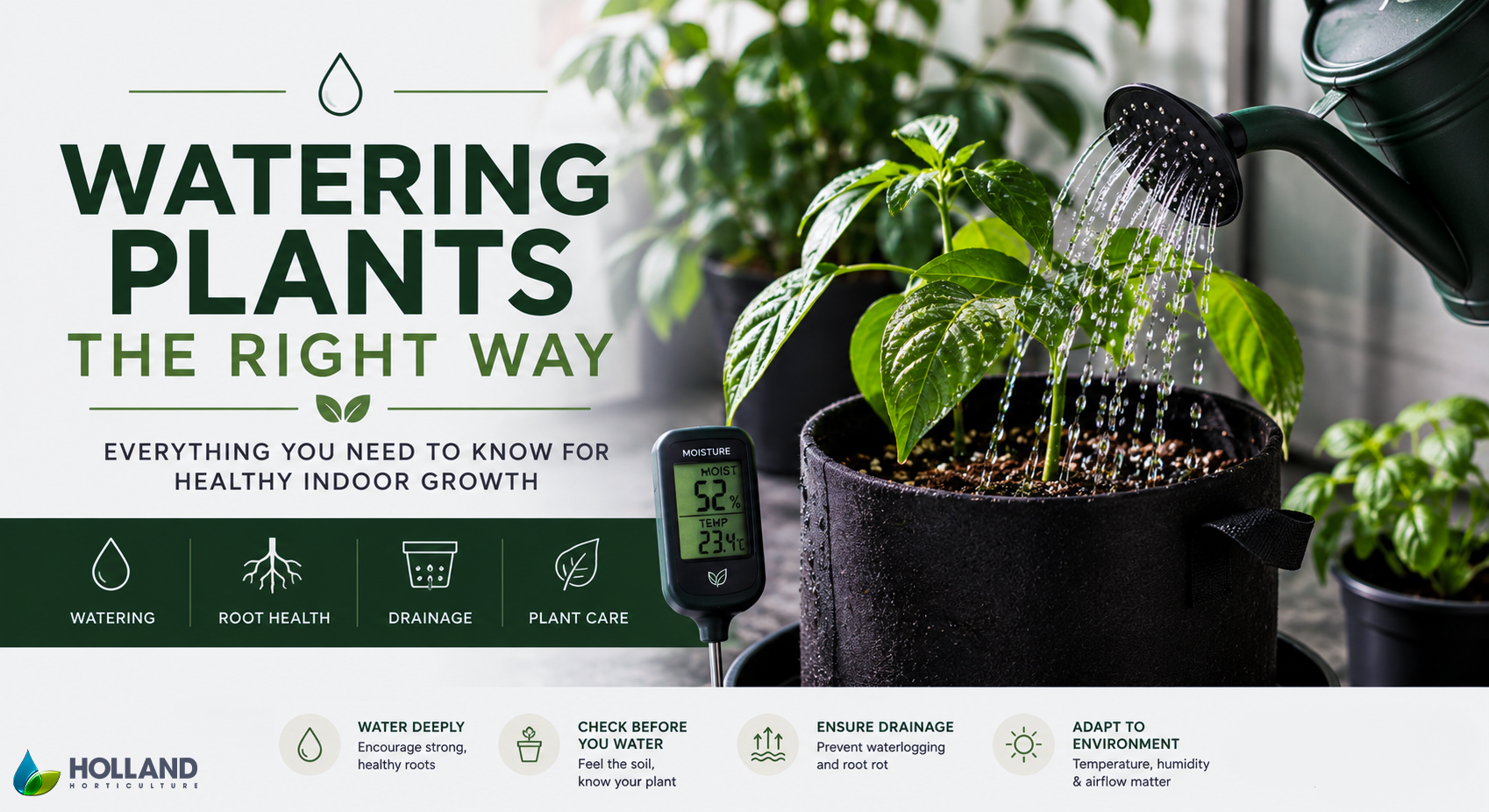
Water Thoroughly
Apply water evenly across the growing media until moisture has reached the entire root zone. Avoid watering only one side of the container.
Allow Proper Drainage
Containers should always allow excess water to drain freely. Standing water around roots can reduce oxygen availability and increase the risk of root problems.
Water at the Right Time
Morning is generally the best time to water indoor plants, allowing them to utilise moisture throughout the day.
Use Room Temperature Water
Extremely cold water can temporarily shock plant roots, while excessively warm water holds less dissolved oxygen.
Correct watering becomes even more important after moving plants into larger containers, as newly transplanted roots need time to establish. If you've recently repotted your plants, our Transplanting Guide explains how to help plants settle into their new growing environment.
Environmental Conditions Affect Watering
Environmental conditions have a direct impact on how quickly plants use water.
Higher Temperatures
Plants transpire more quickly during warm weather and usually require more frequent watering.
During periods of hot weather, it's important to adjust your watering routine rather than simply watering more often. Increased airflow, cooler lighting schedules and careful monitoring can all help reduce heat stress. Our UK Heatwave Growing Guide explains how to keep indoor plants healthy during extreme summer temperatures.
Low Humidity
Dry air increases water loss through leaves, particularly during summer.
Strong Airflow
Good airflow improves plant health but can also increase evaporation from growing media.
Using environmental monitors helps growers understand changing conditions throughout the year.
As plants move into the vegetative stage, they begin growing rapidly and naturally consume more water and nutrients. To understand how watering fits into this important stage of development, read our Vegetative Growth Guide.
Water requirements also change during flowering, where stable moisture levels help support healthy flower and fruit production. Learn how environmental conditions influence watering during this stage in our Flowering Stage Guide.
Water Quality Matters
The quality of your water can influence nutrient uptake and overall plant health.
- Monitor pH where appropriate
- Avoid contaminated water sources
- Maintain clean reservoirs for hydroponic systems
- Replace stagnant nutrient solutions regularly
Common Watering Mistakes
Watering on a Fixed Schedule
Plants should be watered according to their needs rather than the calendar.
Ignoring Pot Drainage
Poor drainage increases the likelihood of root problems.
Watering Too Little
Light surface watering encourages shallow root development.
Not Monitoring the Environment
Temperature and humidity change throughout the year and should influence watering frequency.
Frequently Asked Questions
How often should indoor plants be watered?
There is no fixed schedule. Watering depends on the growing media, environmental conditions and plant size.
Is it better to overwater or underwater?
Neither is ideal. Maintaining a balance between moisture and oxygen is the key to healthy root development.
Can plants recover from overwatering?
Many plants recover if the problem is identified early and watering practices are corrected.
Should I water every day?
Most indoor plants do not require daily watering, although some hydroponic systems continuously circulate nutrient solution.
Final Thoughts
Learning how to water plants correctly is one of the most valuable skills any grower can develop. Understanding your growing environment, choosing the right watering routine and monitoring plant health will help create stronger roots, healthier foliage and more vigorous growth.
Explore irrigation equipment, environmental monitoring tools, growing media and plant care essentials at Holland Horticulture to help your indoor garden thrive throughout every stage of growth.