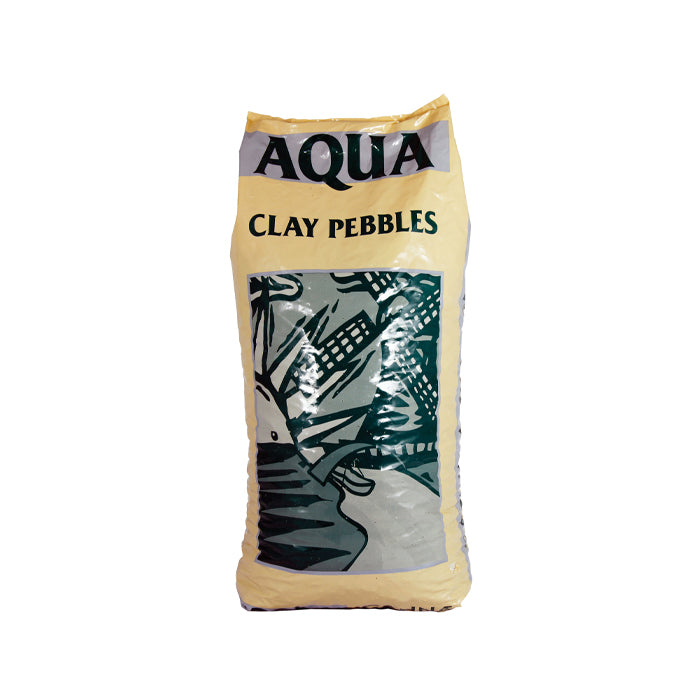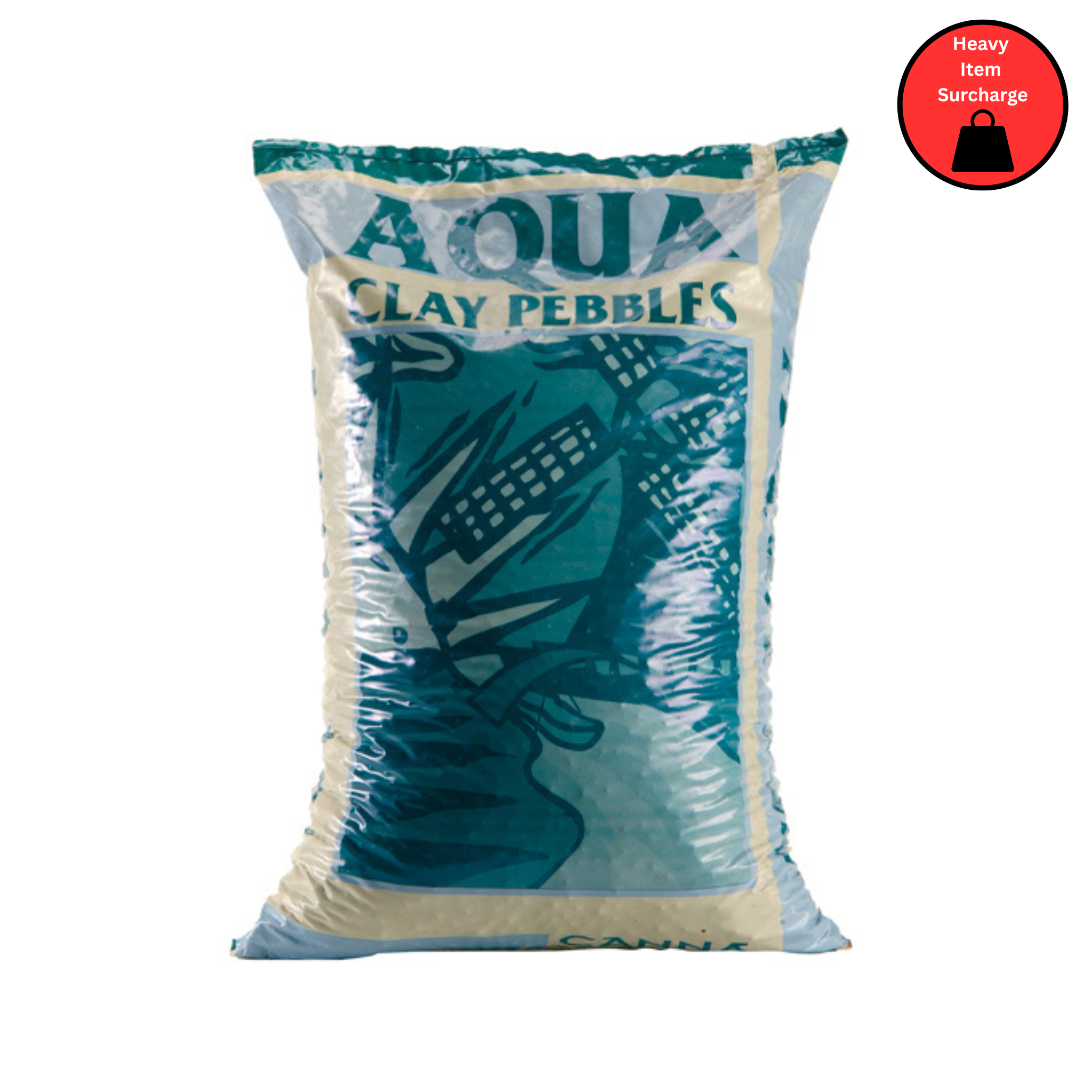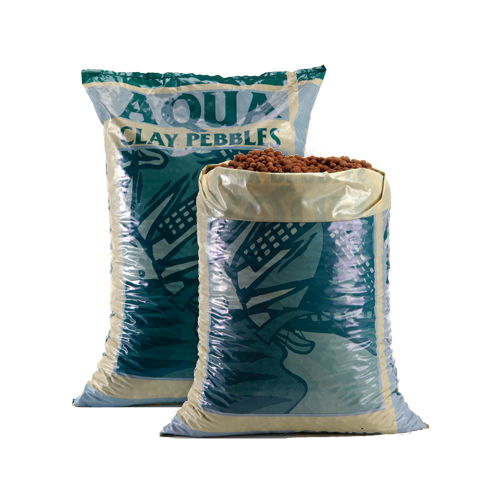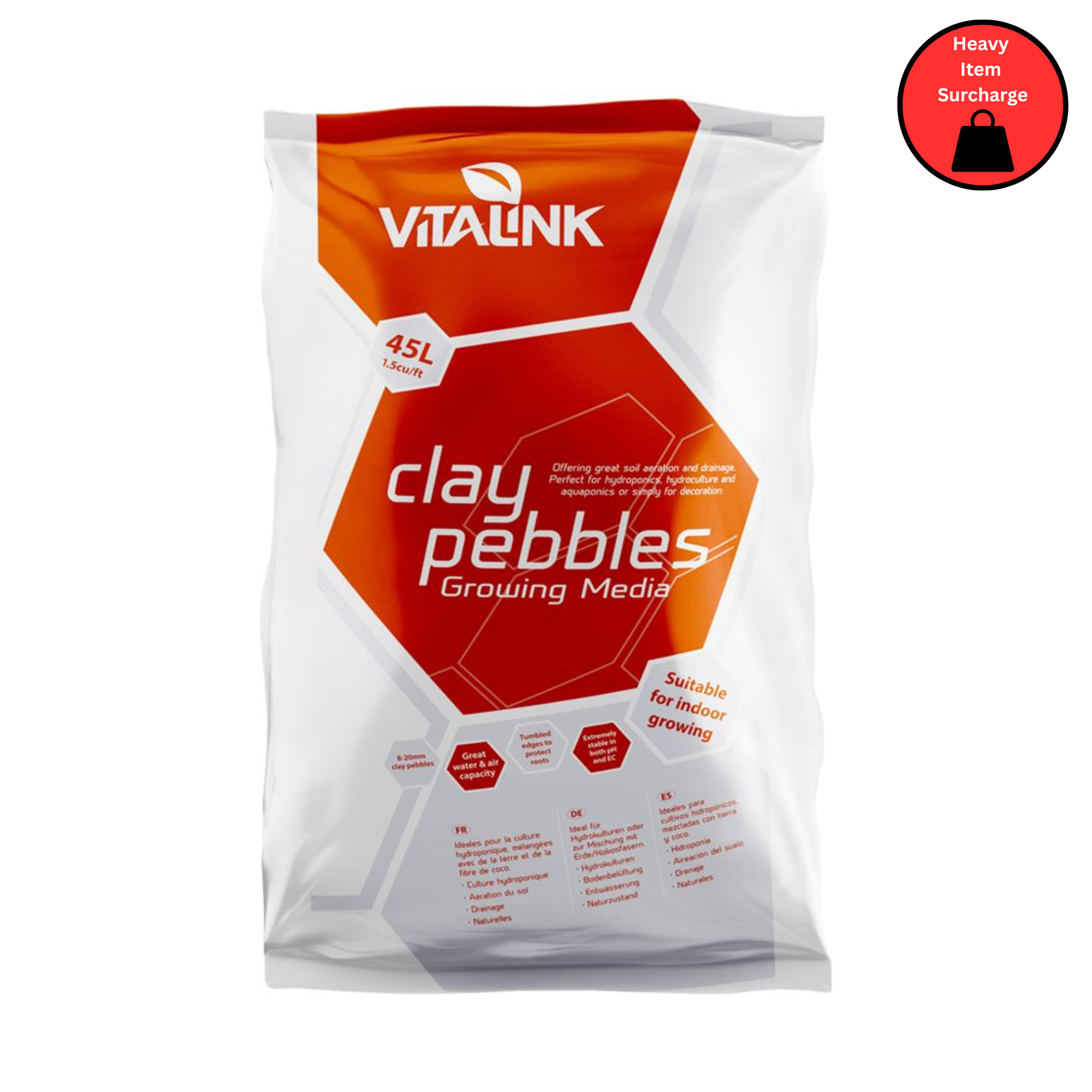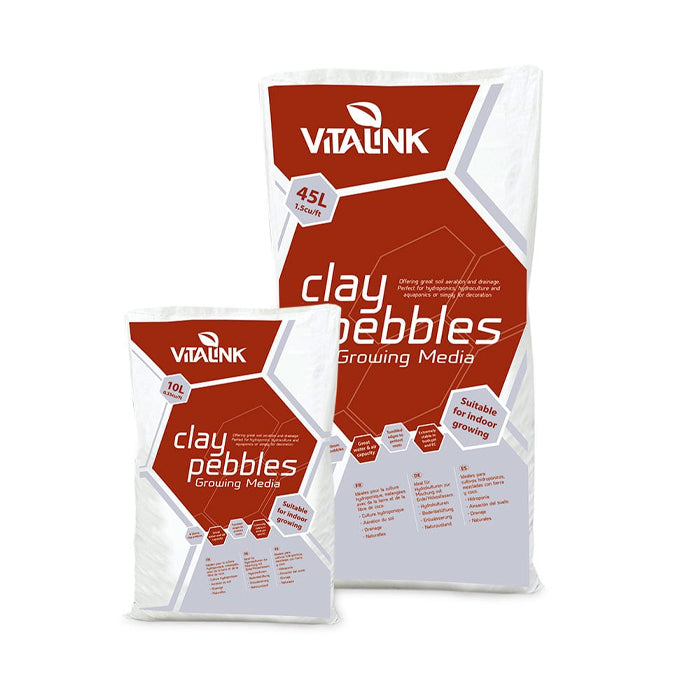
Shop clay pebbles, LECA balls and lava rock for hydroponics. These durable, free-draining growing media provide firm root support and create generous air spaces, making them useful in flood-and-drain systems, net pots, drip irrigation and other suitable soilless setups.
Choose expanded clay pebbles in practical bag sizes or porous lava rock for a heavier, naturally textured alternative. Compare particle type, pack size and system compatibility, then prepare the medium according to the manufacturer's instructions before use.
Clay pebbles and lava rock for hydroponic growing
Clay pebbles and lava rock are coarse mineral growing media designed to maintain structure rather than behave like soil. Their gaps allow nutrient solution to drain away freely while leaving useful oxygen around the roots. They contain little or no available nutrition, so plants receive their feed from a correctly prepared hydroponic nutrient solution.
Both media can be used alone in compatible systems or as structural components in mixed substrates. Their handling characteristics differ, however: expanded clay is rounded and relatively lightweight, while lava rock is heavier, angular and naturally irregular. The best choice depends on the system, pot, irrigation cycle and amount of physical support required.
What are clay pebbles?
Hydroponic clay pebbles are made by heating suitable clay until it expands into hard, porous balls. They are also commonly described as expanded clay aggregate, LECA, clay balls or hydroton-style pebbles. Their rounded form is easy to pour around roots and into net pots, while the spaces between the pebbles promote rapid drainage and good air movement.
Clay pebbles are generally inert and contain no meaningful nutrient charge of their own. This gives the grower direct control over feeding, but it also means that water quality, nutrient concentration and pH must be managed for the selected crop and system. Always check the individual product instructions because preparation and particle specifications can vary between brands.
What is lava rock growing media?
Lava rock is a porous volcanic material with an open, rugged surface. Its weight helps stabilise plants, pots and irrigation fittings, while its irregular shape creates structural gaps through which air and water can move. It is particularly useful where a heavier mineral medium is preferred over rounded clay pebbles.
Natural rock can contain loose particles or dust from processing and transport. Rinse it thoroughly before use and confirm that the selected grade is suitable for horticultural or hydroponic applications. Wear suitable protection and handle the angular pieces carefully when filling or cleaning containers.
Clay pebbles compared with lava rock
- Shape: clay pebbles are rounded and consistent; lava rock is angular and naturally varied.
- Weight: expanded clay is comparatively light; lava rock provides greater ballast.
- Drainage: both create an open, highly free-draining root zone in suitable systems.
- Handling: rounded pebbles are easier to pour and remove; lava rock requires more careful handling.
- Root support: either can support plants, but the heavier rock can improve stability in some containers.
- Preparation: both should be inspected and rinsed before use according to the supplier's directions.
Which hydroponic systems use clay pebbles?
Flood-and-drain systems
Clay pebbles are widely used in flood-and-drain systems. Nutrient solution periodically enters the growing area and then drains back to the reservoir, drawing fresh air into the gaps between particles. Irrigation timing must be matched to the system, root mass and environment rather than copied from a soil schedule.
DWC and RDWC net pots
In DWC and RDWC systems, pebbles are commonly used inside net pots to hold the plant and protect the crown while roots extend towards the aerated nutrient solution. They are a support medium in this application, not a substitute for reservoir aeration or water-level management.
Drip irrigation and recirculating systems
Coarse mineral media can also suit compatible drip-fed pots and recirculating systems. Because they retain less moisture than coco or soil-based mixes, irrigation may need to be more frequent and precisely controlled. Check that pumps, drippers and return paths can operate reliably with the chosen particle grade.
Pot drainage and mixed substrates
Clay pebbles are sometimes used as a structural layer or as part of a coco blend. If you want a prepared substrate with greater water retention, compare our coco blends and mixes. Avoid assuming that a pebble layer automatically prevents overwatering; container design and correct irrigation remain essential.
How to prepare clay pebbles and lava rock
- Inspect the bag and read the manufacturer's preparation instructions.
- Place the media in a suitable container or sieve that prevents particles escaping.
- Rinse with clean water until loose dust and debris have been removed.
- Soak or condition the media only when the product or system instructions require it.
- Fill pots without crushing particles or compacting the root zone.
- Test irrigation and drainage before introducing the complete crop.
Do not allow rinse water or mineral particles to block household drains. Work in a ventilated area, avoid inhaling dust and follow the handling information printed on the packaging.
Feeding and monitoring an inert growing medium
Clay pebbles and horticultural lava rock do not replace a nutrient programme. Select a suitable hydroponic base nutrient, measure concentrates accurately and follow the nutrient manufacturer's dosage and mixing order. Requirements vary by crop, water source and growth stage.
Use appropriate pH and EC meters where the feeding programme requires them. Check the reservoir regularly, maintain suitable aeration and temperature, and make controlled adjustments rather than adding concentrated pH products or nutrients directly around exposed roots.
Can clay pebbles and lava rock be reused?
These durable media may be reusable when they remain physically sound and can be cleaned thoroughly. Remove old roots and organic matter, wash the particles, then use a crop-safe cleaning or disinfection method appropriate to your equipment. Rinse completely before reuse and discard contaminated, degraded or difficult-to-clean material.
Reuse is not automatically suitable after every crop. Pest, pathogen and root-disease history should be considered, and professional or commercial growers should follow their own hygiene procedures. Never mix cleaned media back into an unclean bag.
Choosing the right bag and particle type
- Calculate the usable volume of every pot, tray or growing bed before ordering.
- Allow for the volume occupied by net pots, fittings and established root systems.
- Choose rounded clay pebbles when easy handling and consistent particles are priorities.
- Choose lava rock when additional weight and a rugged, porous structure are useful.
- Confirm that the particle grade will stay securely inside the selected pot or basket.
- Use only horticultural media that the supplier identifies as suitable for the intended application.
For other root-zone options, explore our perlite and vermiculite, coco coir and complete Growing Media hub.
Why buy clay pebbles from Holland Horticulture?
Established in 1996, Holland Horticulture supplies hydroponic growing media, nutrients and systems to beginners, experienced indoor gardeners and commercial growers. Choose practical pack sizes from recognised manufacturers, supported by experienced advice, UK delivery and Click & Collect from our stores.
Clay pebbles and lava rock FAQs
Are clay pebbles the same as LECA?
LECA means lightweight expanded clay aggregate. In horticulture, the terms LECA balls, expanded clay pebbles and clay balls are commonly used for the same general type of fired-clay growing medium, although size and quality vary by manufacturer.
Do clay pebbles contain nutrients?
No meaningful plant nutrition is normally supplied by the pebbles themselves. Plants grown in an active hydroponic system require an appropriate nutrient solution and correct water management.
Should clay pebbles be rinsed before use?
Yes. Rinsing removes loose clay dust created during manufacture, packing and transport. Continue until the runoff is substantially clear, then follow any further conditioning directions supplied with the product.
Can I use clay pebbles in DWC?
Clay pebbles are commonly used in DWC net pots to support the plant while roots grow into the aerated solution. The water level and aeration must still be set correctly for the system and plant stage.
Is lava rock suitable for hydroponics?
Suitable horticultural lava rock can provide drainage, air spaces and stable physical support. Confirm the product's intended use and particle size, rinse it thoroughly and follow the system manufacturer's instructions.
Can clay pebbles be mixed with coco?
Yes. Clay pebbles are used in some coco blends to increase structural drainage and aeration. A ready-mixed product provides a consistent manufacturer-specified ratio, while custom blends require careful measuring and system testing.
How many clay pebbles do I need?
Add the internal volume of every container that will be filled, then allow for baskets, fittings and the fact that stated pot capacity may not equal the amount of media used. Ordering a small margin avoids running short during setup.