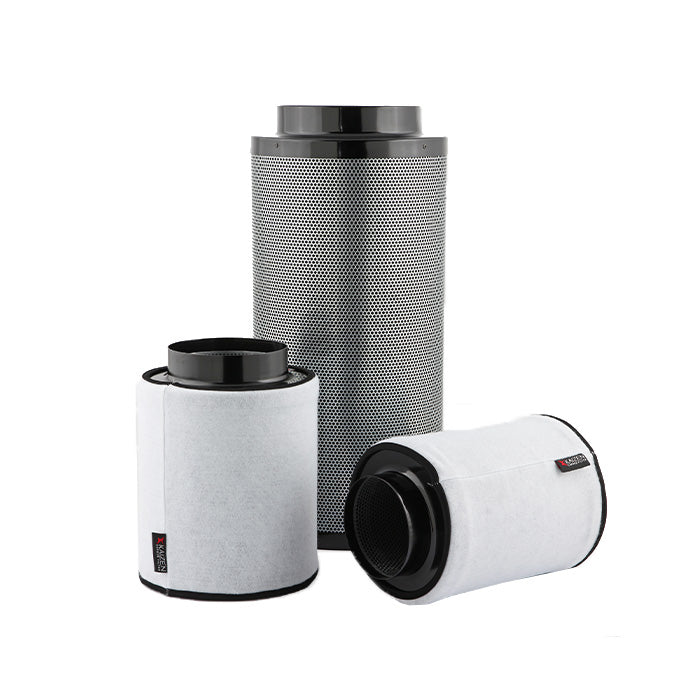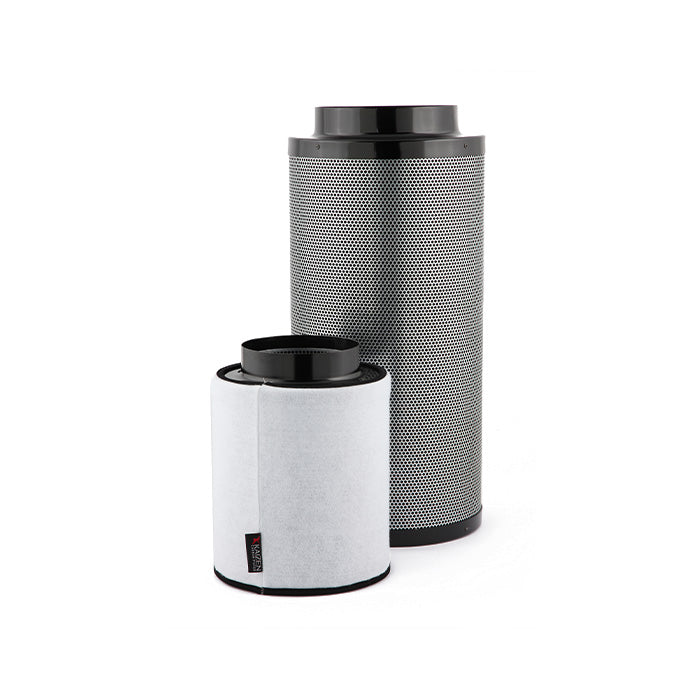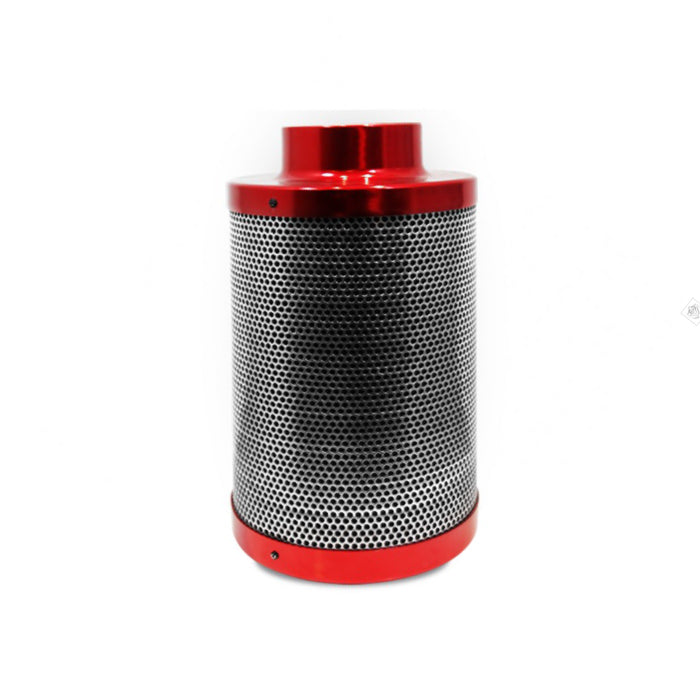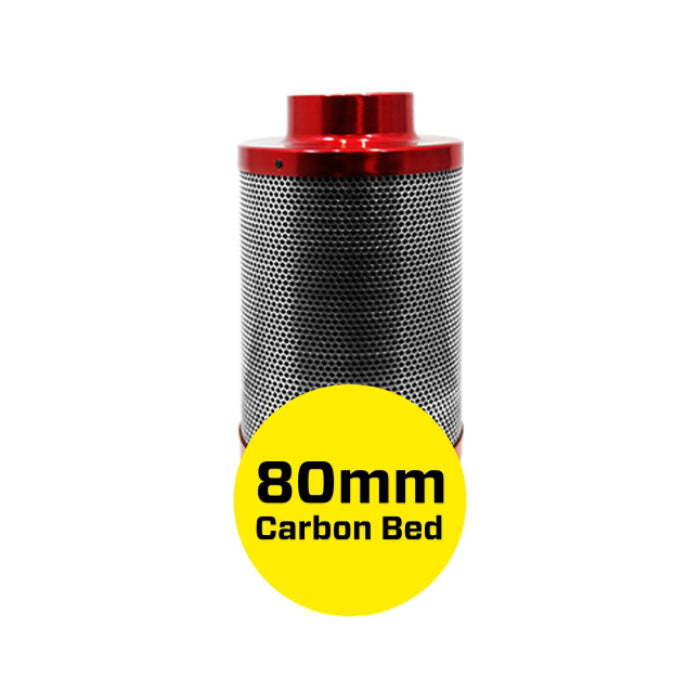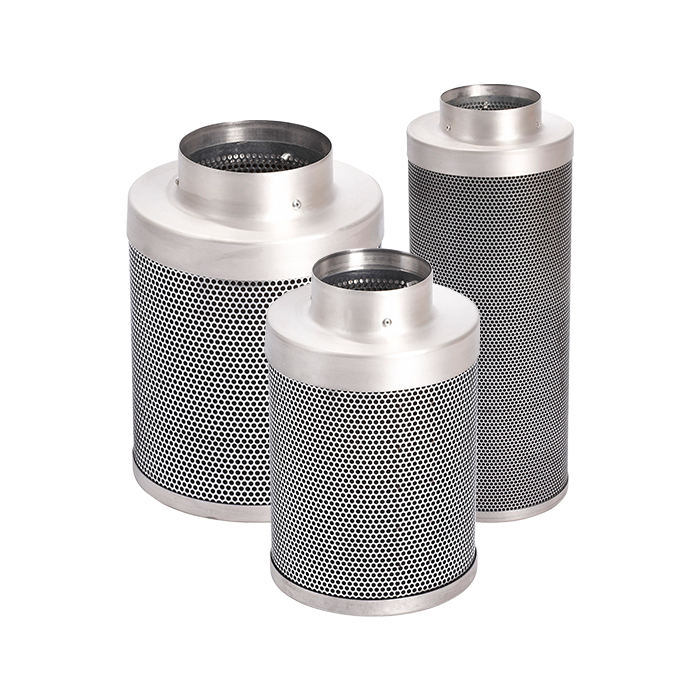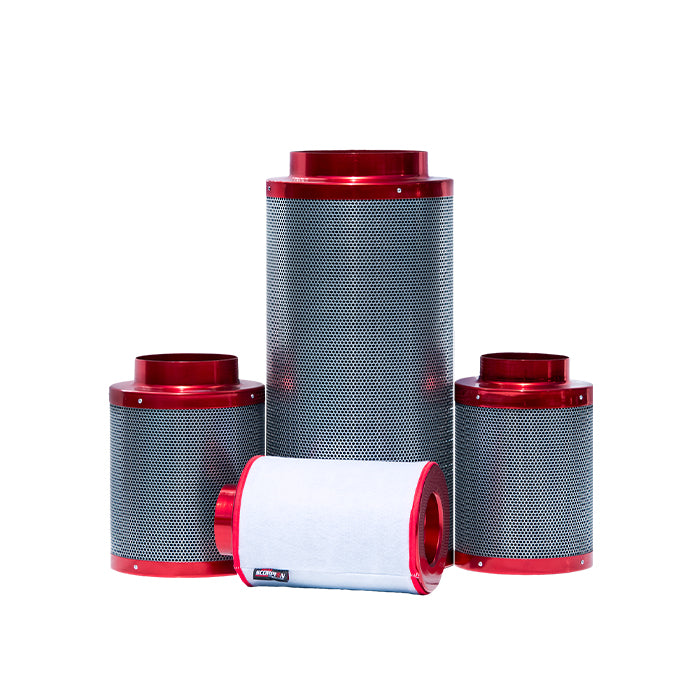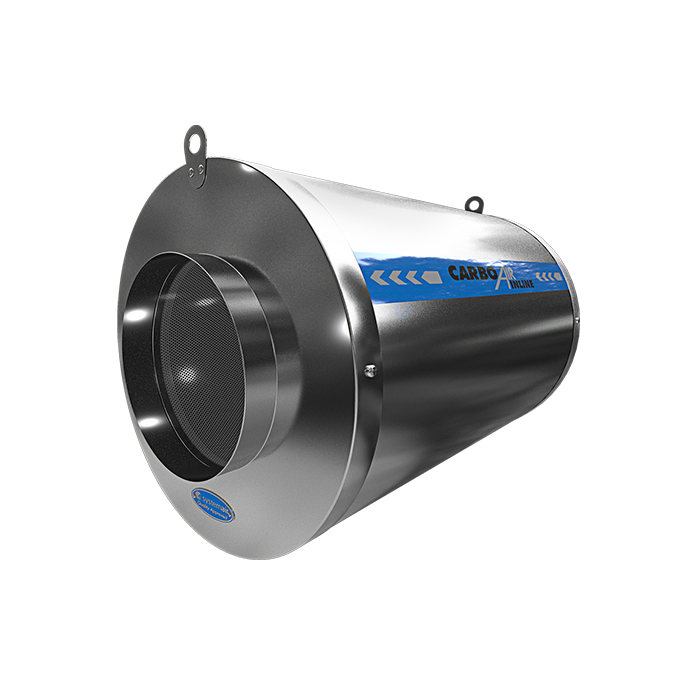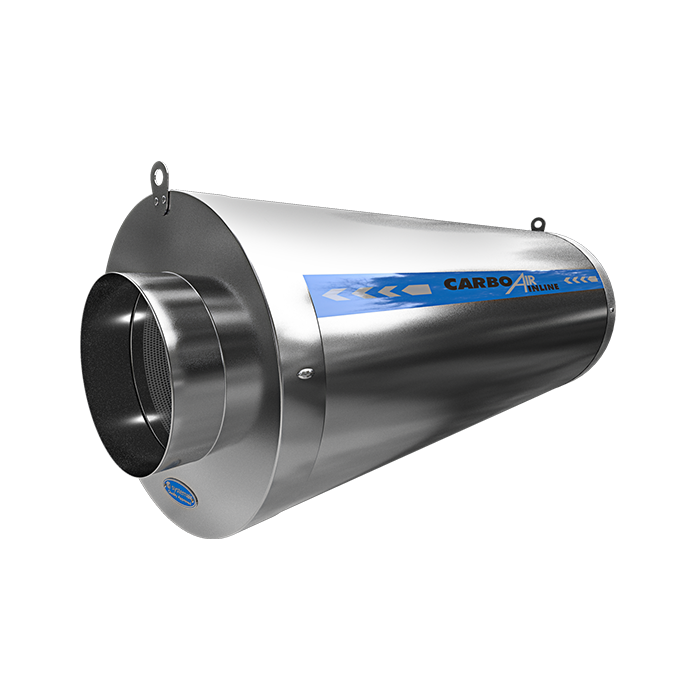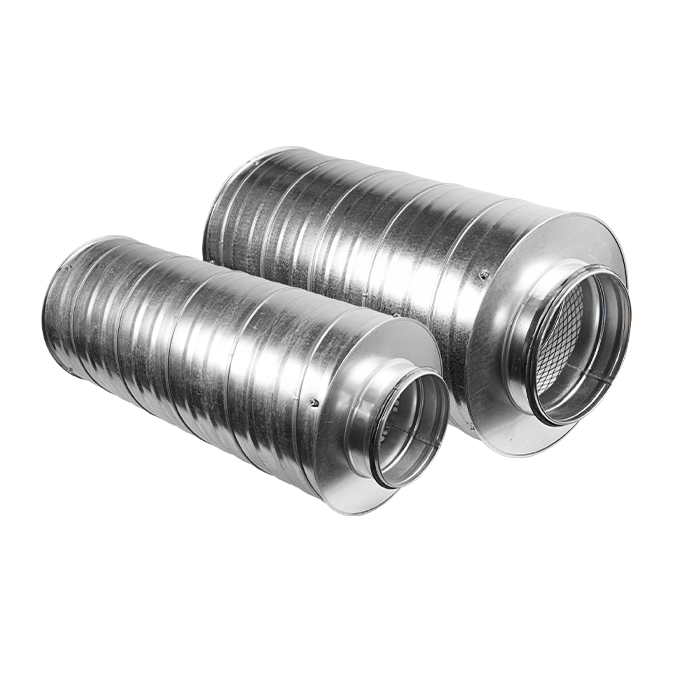
Keep extracted air cleaner with a grow room carbon filter matched to your ventilation system. Explore activated-carbon filters from Kaizen, Rhino Pro, Red Scorpion, CarboAir and AC Infinity, with sizes available for compact grow tents through to larger indoor horticultural spaces.
Choose by duct diameter, recommended airflow and physical size, then pair the filter with a compatible extraction fan. This collection also includes replacement filter sleeves, supports and silencers to help maintain filtration performance and complete a quieter installation.
Carbon filters for grow room ventilation
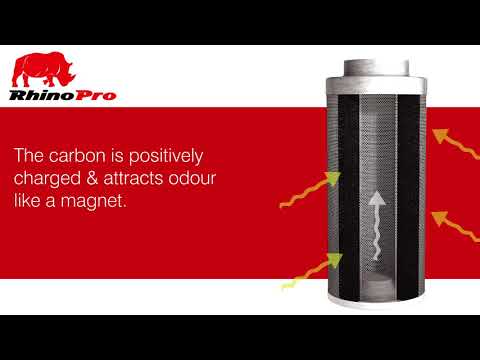
A carbon filter forms the air-treatment stage of an extraction system. The inline fan draws air through the filter's perforated housing and bed of activated carbon before moving it through the ducting to the outlet. Odour-producing compounds are held on the carbon's highly porous surface through a process called adsorption.
Carbon filtration does not remove heat or humidity by itself. Those conditions are managed by exchanging air at a suitable rate, while the filter treats the extracted air. The fan, filter, ducting and room intake therefore need to be considered as one ventilation system rather than as separate products.
Types of carbon filter and accessory
Standard cylindrical carbon filters
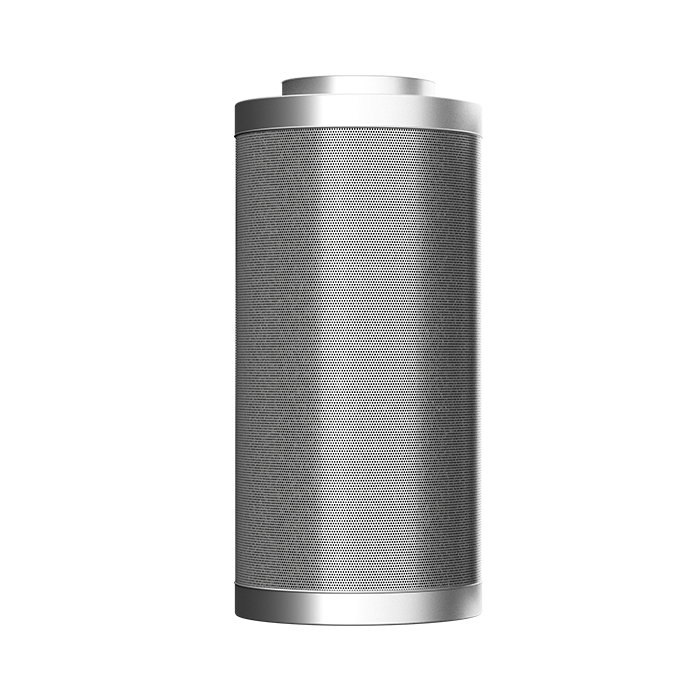
Cylindrical filters are the usual choice for grow tents and indoor gardens. Air is drawn evenly through the outer pre-filter, perforated housing and carbon bed before entering the central duct connection. Models vary in carbon grade, bed depth, housing construction, overall length, weight and recommended airflow.
Deep-bed and higher-capacity filters
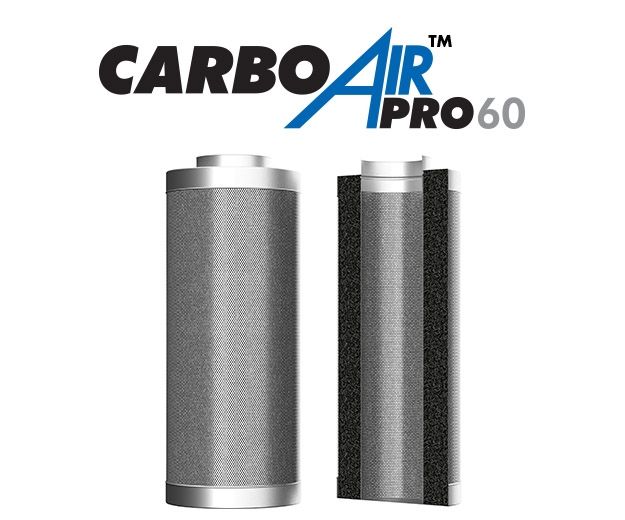
Larger or premium filters may use a deeper carbon bed and a longer body to provide more carbon surface area. They can suit higher-airflow systems, but physical size alone does not determine compatibility. Compare the manufacturer's airflow range and pressure information with the expected performance of the selected fan.
Inline carbon filters
An inline filter is designed to sit within a duct route rather than only at the beginning of the extraction system. This can provide additional installation flexibility where internal space is limited or where the manufacturer's specified configuration requires it. Confirm the permitted airflow direction, mounting position and fan compatibility before installation.
Pre-filter sleeves
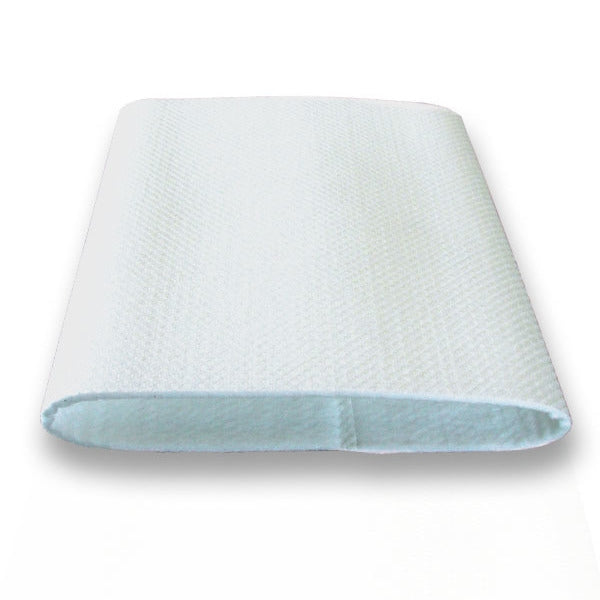
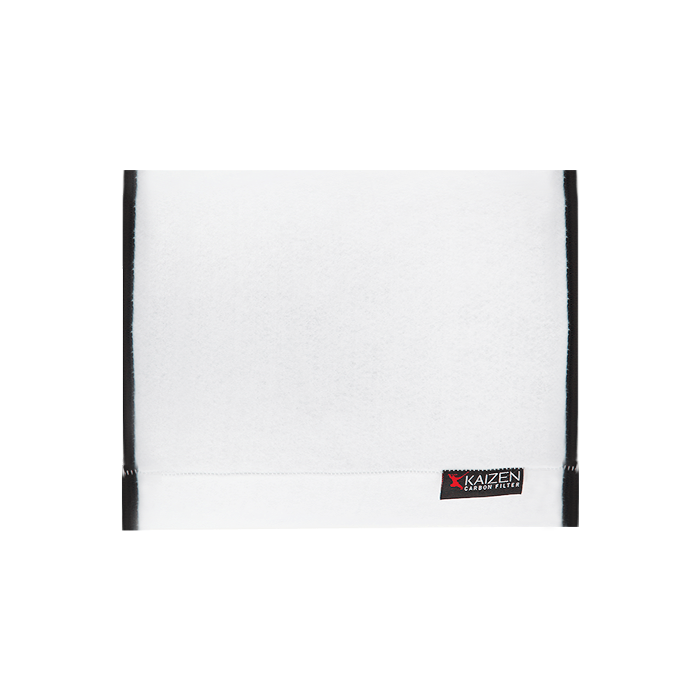
The fabric sleeve around a carbon filter captures larger airborne dust before it reaches the carbon bed. Keeping the sleeve in good condition helps protect airflow and extend the useful performance of the filter. Use the correct replacement sleeve for the filter's diameter and length, and clean or replace it only as directed by the manufacturer.
Ventilation silencers
A silencer is a separate ventilation component intended to reduce sound travelling through the duct route. It does not adsorb odours and cannot replace a carbon filter. Match its duct diameter and airflow capacity to the rest of the system, and allow for the additional resistance it introduces.
How to choose the right carbon filter
Match the duct diameter
Start with the connection size used by the fan and filter. Common options include 100mm, 125mm, 150mm, 200mm, 250mm and 315mm, often also described as 4, 5, 6, 8, 10 and 12 inches. Keeping the same diameter through the filter, fan and ducting normally creates a simpler route with fewer restrictions.
Compare airflow ratings
Check the filter's recommended or maximum airflow in m³/hr against the fan's expected working airflow. A fan that moves air too quickly may reduce contact time with the carbon, while an undersized or restrictive filter can place additional pressure on the fan. Use the manufacturer's performance information rather than matching products only by flange size.
Allow for real-world airflow loss
Fan output is reduced by the carbon filter, duct length, bends, reducers, grilles and other fittings. Maximum free-air figures do not represent every installed system. Keep the route short and straight where practical, then allow sensible capacity for resistance when selecting the fan and filter combination.
Check size, weight and mounting space
Two filters with the same connection diameter can have very different body lengths and weights. Measure the available space and check that the tent frame, ceiling point, stand or mounting hardware can safely support the selected filter. Leave enough room to attach ducting, maintain the sleeve and remove the filter when replacement is needed.
Consider carbon type and bed depth
Activated carbon differs in source material, pore structure, hardness, granule size and packing density. Filter manufacturers balance these properties with bed depth and housing design to provide adsorption while maintaining airflow. Compare the published specification and intended duty instead of judging performance from carbon weight alone.
Installing a carbon filter
- Plan the air path: identify the intake, filter, fan, ducting and exhaust point before mounting anything.
- Check airflow direction: follow the arrows and installation guidance supplied with the fan and filter.
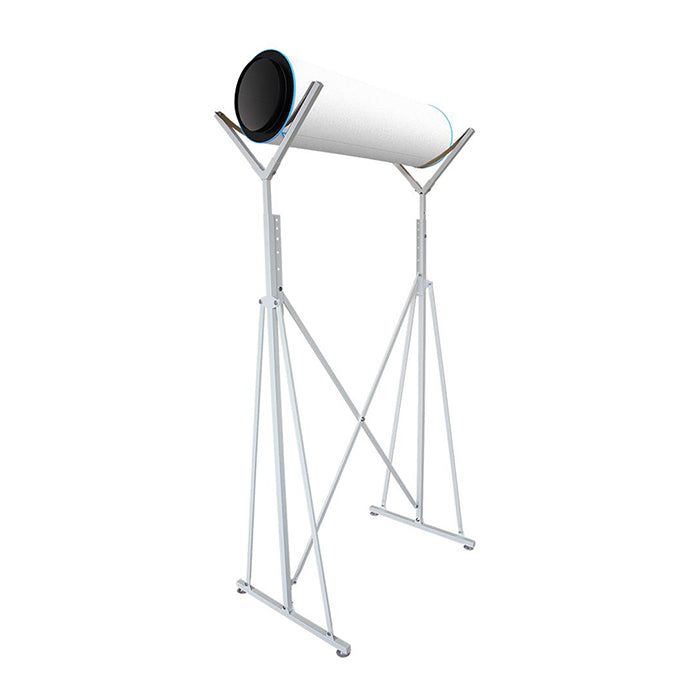
- Support the weight: use appropriate straps, brackets or a filter stand rated for the load.
- Match connections: use compatible diameters and minimise reducers, sharp bends and unnecessary duct length.
- Seal every joint: secure connections with suitable clamps and ventilation tape so untreated air cannot bypass the filter.
- Keep the sleeve clear: do not cover the pre-filter with straps or place it directly against a wall.
- Test the system: check for air leaks, loose fittings, excessive vibration and restricted airflow after installation.
Many installations draw air through a filter positioned inside the growing space, but some products permit alternative push-through or inline layouts. Only use a configuration supported by the manufacturer's instructions. Keep electrical equipment isolated from water and never suspend a heavy filter from flexible ducting.
Looking after a carbon filter
Inspect the pre-filter sleeve regularly for dust build-up and restriction. If the manufacturer permits washing, remove the sleeve and allow it to dry completely before refitting it. Do not wash the activated-carbon body or allow it to become saturated with water.
Carbon-filter service life varies with operating hours, humidity, airborne contaminant load, airflow and carbon capacity. Replace the filter when odour-control performance declines despite a clean sleeve and correctly sealed system. A sudden problem can also indicate an air leak, incorrect fan speed or untreated air bypassing the filter, so check the full route before assuming the carbon is exhausted.
Complete your extraction system
Pair your filter with a compatible extraction and intake fan, then connect the system using correctly sized ducting, clamps and fittings. For a convenient matched package, compare our complete extraction kits. A suitable fan speed controller can provide manual or environmental control when it is compatible with the selected fan motor.
Why buy carbon filters from Holland Horticulture?
Established in 1996, Holland Horticulture supplies carbon filters and ventilation equipment for compact grow tents, home horticultural spaces and larger installations. Our range covers multiple duct diameters, airflow requirements and budgets, supported by practical advice, UK delivery and Click & Collect.
Carbon filter FAQs
What size carbon filter do I need?
Match the connection diameter to the fan and ducting, then check that the filter's recommended airflow range suits the fan's expected working airflow after resistance is considered. Also confirm that the filter will physically fit and can be supported safely.
Can a carbon filter be too small for the fan?
Yes. Excessive airflow can reduce the time air spends in contact with the carbon and may exceed the filter's intended operating range. An undersized filter can also increase system resistance. Use the manufacturer's airflow ratings when pairing the products.
How long does a grow room carbon filter last?
There is no universal replacement interval. Service life depends on carbon capacity, operating hours, humidity, airflow, contaminant level and sleeve maintenance. Monitor performance and follow the individual manufacturer's guidance.
Can I wash and reuse a carbon filter?
The carbon-filled filter body should not normally be washed. Some external pre-filter sleeves are washable, but only follow the care instructions supplied with that sleeve. Make sure a washed sleeve is completely dry before refitting it.
Should the carbon filter go before or after the extraction fan?
A common arrangement draws air through the filter before it reaches the fan. However, installation options vary, particularly with inline filters and systems designed for push-through operation. Follow the airflow direction and configuration approved by the product manufacturer.
What is the difference between a carbon filter and a silencer?
A carbon filter uses activated carbon to adsorb odour-producing compounds from the air. A silencer reduces sound travelling through a ventilation route. They perform different jobs and may be used together in a compatible system.
Why can I still notice odour with a carbon filter installed?
Check for loose duct connections, damaged sleeves, air bypassing the filter and a fan operating outside the filter's recommended range. If the installation is sealed and correctly matched, declining performance may indicate that the carbon has reached the end of its useful service life.