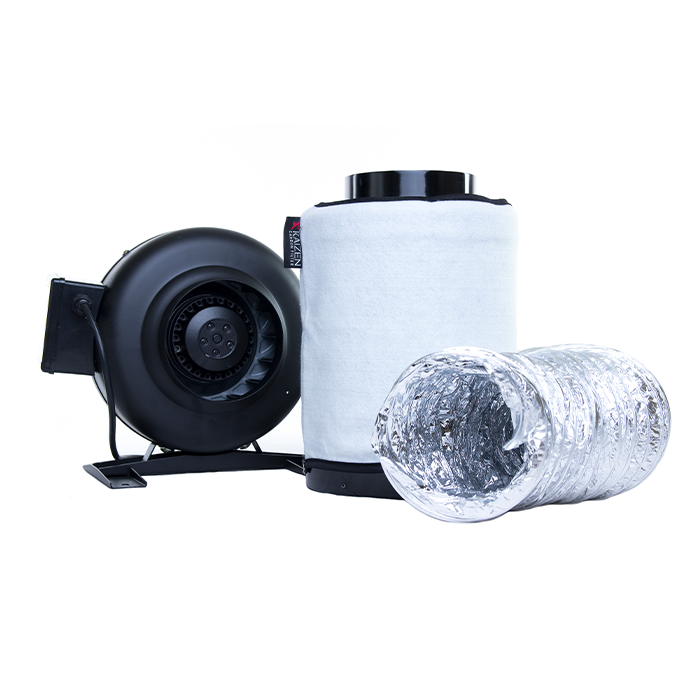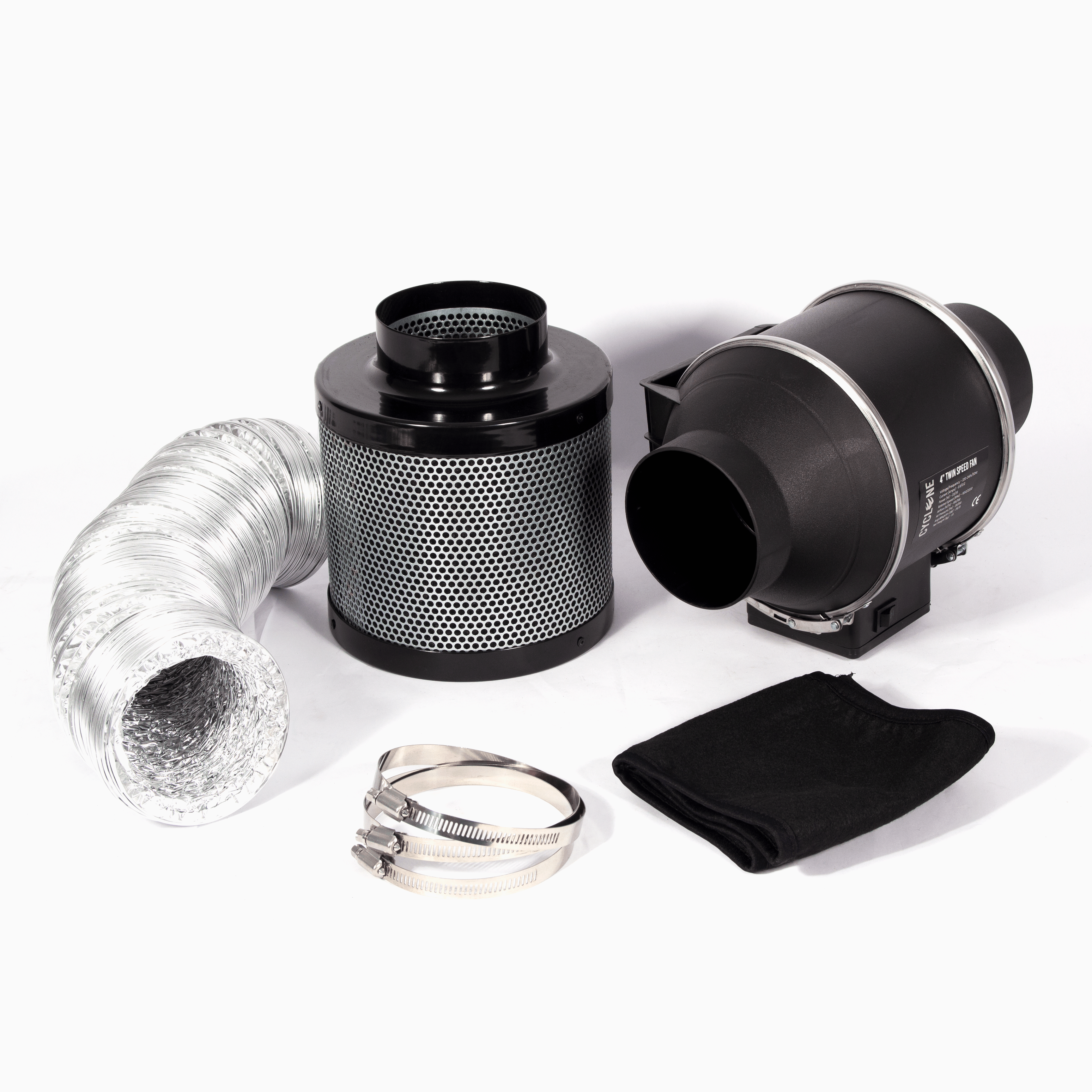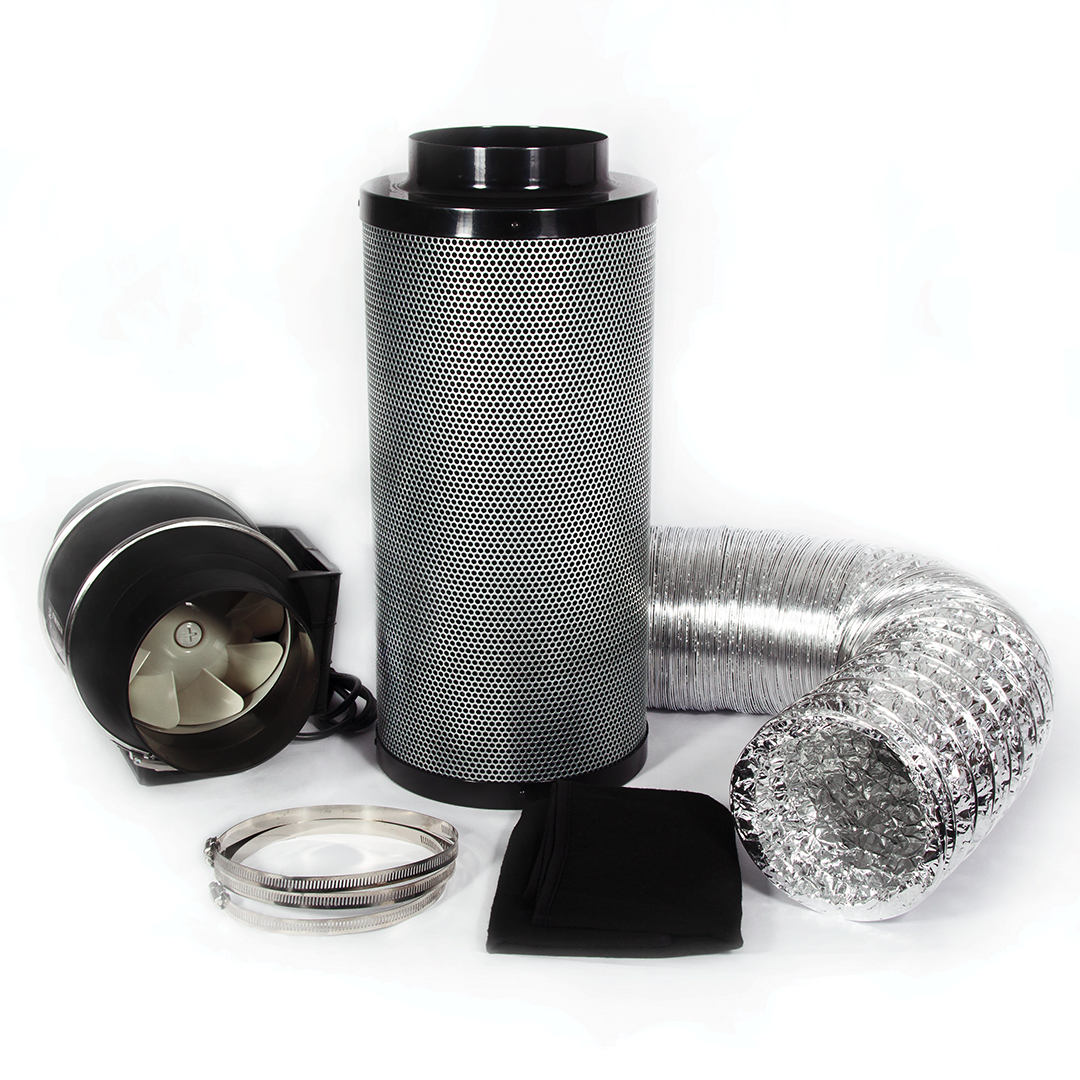
Build a dependable ventilation setup with a complete grow room extraction kit. These convenient packages combine compatible extraction equipment such as an inline fan, carbon filter, ducting and fittings, with options available for compact grow tents through to larger indoor horticultural spaces.
Compare duct diameter, airflow capacity, filter rating, fan type, noise level and controller compatibility before choosing. A properly selected kit helps remove warm, humid air, bring fresh air through the growing area and manage airborne odours without sourcing every component separately.
Complete grow room extraction kits
An extraction system draws used air out of a grow tent or indoor garden so fresh replacement air can enter. A complete kit simplifies the process by grouping components that share a compatible duct diameter and are intended to work together. This removes much of the uncertainty involved in matching separate fans, filters and connectors.
Contents vary between products. Some kits provide the essential fan, filter, ducting and clips, while more advanced packages may also include a speed controller, environmental controller, hanging straps or additional fittings. Always check the individual product contents and specifications before ordering.
What is included in an extraction kit?
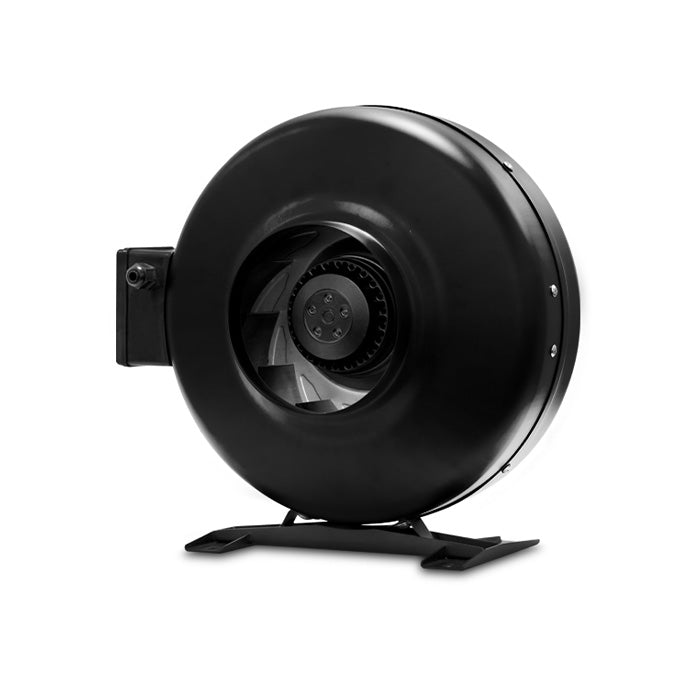
Inline extraction fan
The inline fan creates the airflow that moves warm, humid air out of the growing area. Fans differ in maximum airflow, pressure performance, motor type, noise output and control options. Browse our full range of extraction and intake fans when you need an individual replacement or a different specification.
Carbon filter
A carbon filter is normally installed on the intake side of the extraction fan. Air passes through the pre-filter and activated carbon before leaving the space, helping reduce airborne particles and unwanted odours. The filter's recommended airflow range should suit the fan's working airflow. Explore individual carbon filters and silencers for replacements and alternative capacities.
Ducting and fittings
Flexible ducting carries extracted air to the chosen outlet. Kits may include aluminium ducting, clamps, reducers or connectors depending on the model. Keep duct runs as short and straight as practical because long runs, tight bends and restrictions reduce real-world airflow. Additional ducting and ventilation accessories are available for more complex installations.
Controllers and mounting accessories
Selected kits include manual speed control or an environmental controller, but many basic kits do not. Check that any separate controller is compatible with the fan motor and its control method. Suitable straps, brackets or fixings should support the weight of the fan and filter securely without crushing the ducting.
How to choose the right extraction kit
Measure the growing space
Calculate the internal volume by multiplying length, width and height in metres. The required airflow then depends on the intended air-exchange rate, lighting heat load, ambient conditions and resistance created by the filter and ducting. Use the fan manufacturer's performance guidance and allow sensible capacity for these losses rather than relying only on the free-air maximum.
Match fan and filter airflow
The fan and filter should share the same connection diameter and have compatible airflow ratings. A filter that is too restrictive can reduce performance, while excessive airflow through a filter can reduce its effectiveness. Compare the filter's recommended operating range with the fan's expected airflow after ducting and resistance are considered.
Choose the correct duct diameter
Common ventilation sizes include 100mm, 125mm, 150mm, 200mm, 250mm and 315mm. Larger diameters can carry more air at a lower air velocity, but the right size depends on the equipment and installation. Keep the fan, filter and ducting at one diameter where possible; use reducers only when necessary.
Consider noise and fan control
Fan construction, motor technology, mounting method, duct velocity and room acoustics all affect perceived noise. EC fans often provide efficient adjustable operation through a compatible controller, while some AC fans require a specific voltage or transformer-based controller. Check the product instructions before reducing fan speed. View our fan speed controllers for manual and automatic options.
Allow for temperature and humidity
Ventilation requirements change with the heat and moisture produced inside the space and with the condition of the incoming air. Use reliable instruments to monitor the environment after installation. Our temperature and humidity equipment can help track conditions and inform adjustments.
Installing a complete extraction kit
- Plan the route: decide where the filter, fan, ducting and outlet will sit before securing any component.
- Support the equipment: use suitable fixings or straps rated for the combined weight of the fan and carbon filter.
- Reduce restrictions: keep ducting reasonably taut and minimise unnecessary length, sharp bends and crushed sections.
- Seal connections: secure every joint with the supplied clamps or appropriate ventilation tape to limit air leakage.
- Check direction: confirm the airflow arrows on the fan and ensure air is drawn through the carbon filter toward the outlet.
- Test safely: check for vibration, loose fittings and unusual noise before leaving the system running unattended.
Follow the instructions supplied with the individual fan, filter and controller. Electrical equipment should be kept away from water, securely mounted and connected in accordance with the manufacturer's safety guidance.
Maintaining fans, filters and ducting
Inspect the pre-filter regularly and clean or replace it according to the filter manufacturer's guidance. A blocked sleeve restricts airflow and can place additional load on the fan. Carbon-filter service life varies with humidity, airborne contaminants, operating hours and airflow, so replace it when performance declines rather than relying on one fixed timetable.
Check flexible ducting for tears, compression and loose connections, and remove accumulated dust from accessible fan surfaces only when the equipment is isolated from the power supply. Do not open or service a fan unless the manufacturer specifically permits it.
Why buy extraction kits from Holland Horticulture?
Established in 1996, Holland Horticulture supplies complete ventilation equipment for compact grow tents, home horticultural spaces and larger installations. We combine practical product guidance with fast UK delivery, Click & Collect, and experienced support from our Manchester and Huddersfield stores.
Complete extraction kit FAQs
What size extraction kit do I need?
Start with the internal volume of the growing space, then consider the required air-exchange rate, lighting heat load, ambient temperature and resistance from the carbon filter and ducting. Compare these requirements with the manufacturer's airflow data and allow capacity for real-world losses.
Does every extraction kit include ducting and clamps?
No. Contents vary between kits. Many include a fan, filter, flexible ducting and clamps, while others may include a controller or different accessories. Check the contents list on the individual product page before ordering.
Should the fan and carbon filter have the same airflow rating?
Their ratings should be compatible, but they do not need to show one identical maximum number. The filter should support the fan's expected working airflow after resistance from ducting and fittings is considered. Both components should also use compatible connection diameters.
Can I use a speed controller with any extraction fan?
No. Controller compatibility depends on the motor and control method. Some fans accept simple manual control, while EC and digitally controlled fans may require a brand-specific or signal-compatible controller. Check both product specifications before connecting them.
How often should a carbon filter be replaced?
Replacement intervals vary with operating hours, humidity, contaminant load and airflow. Maintain the pre-filter and monitor performance. Replace the carbon filter when odour-management performance noticeably declines or when directed by the manufacturer.