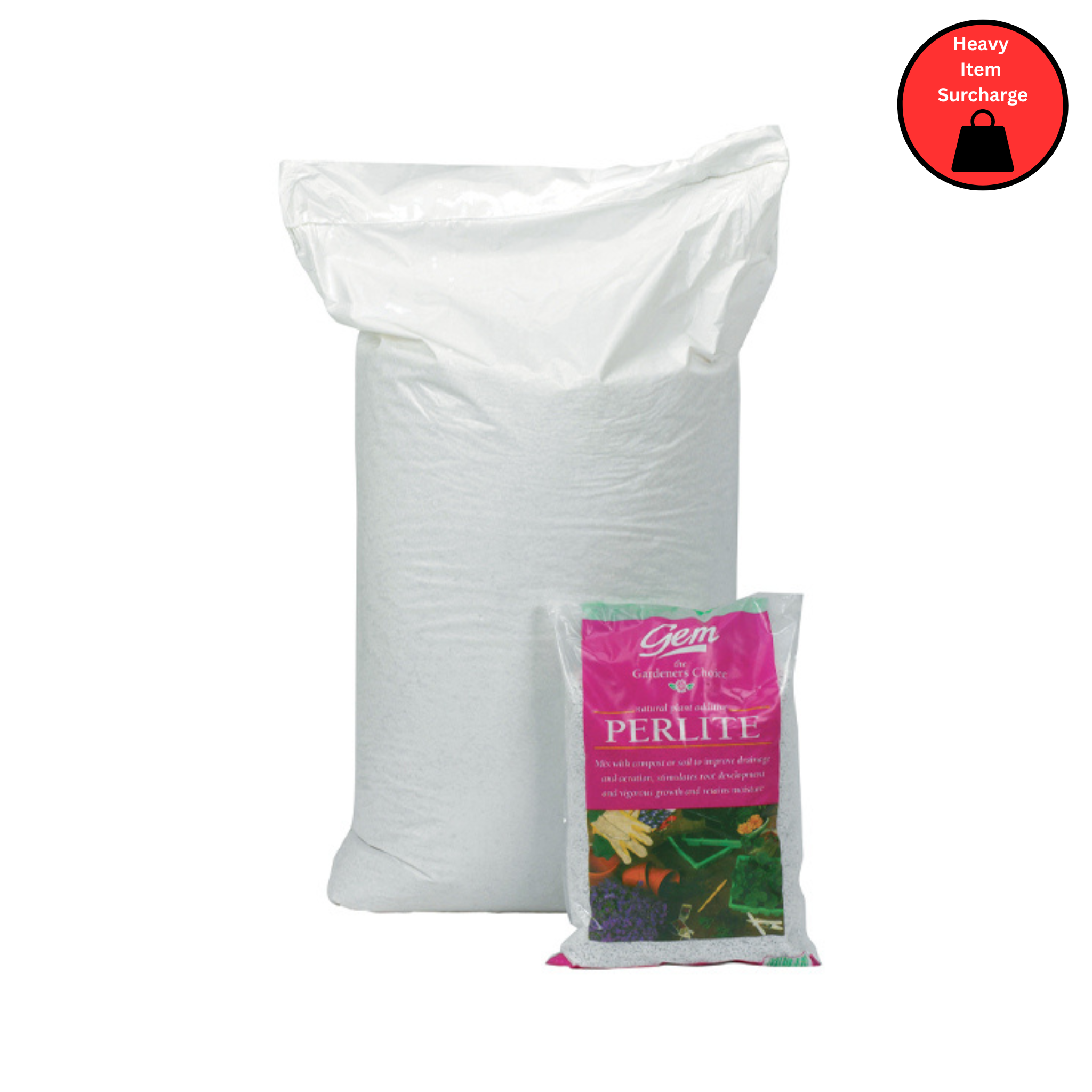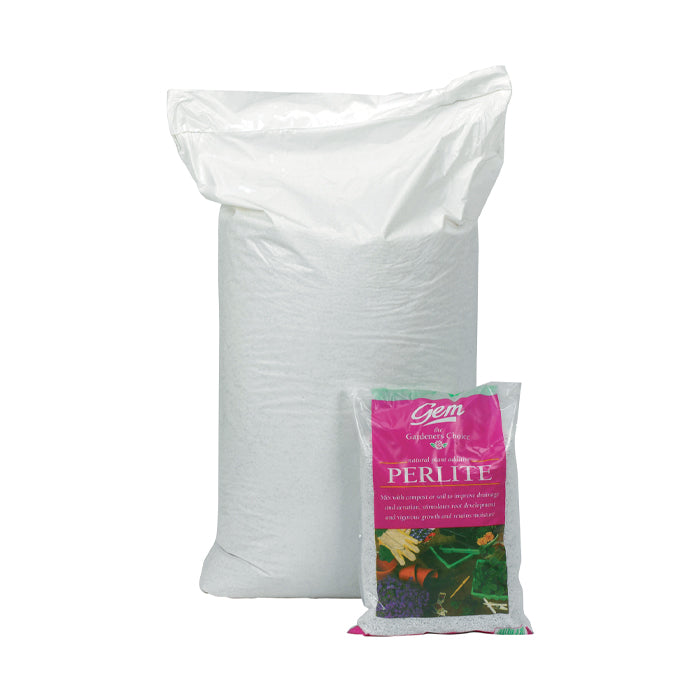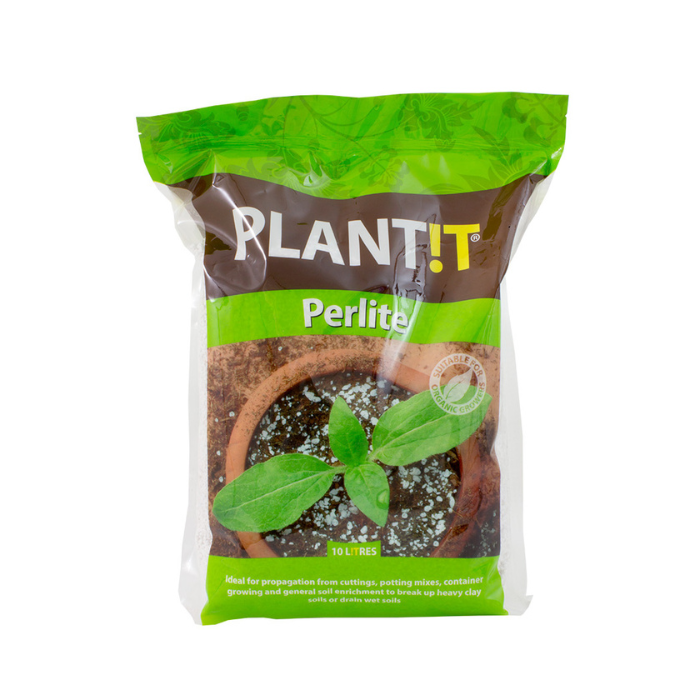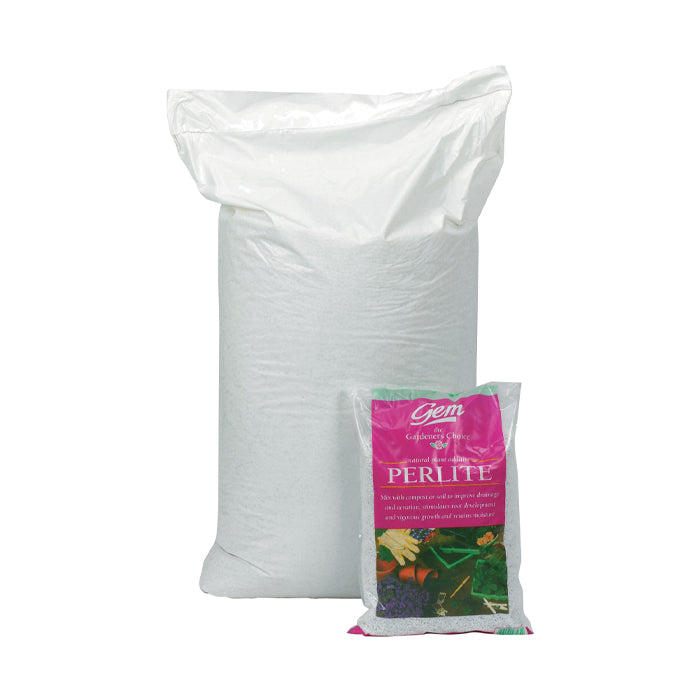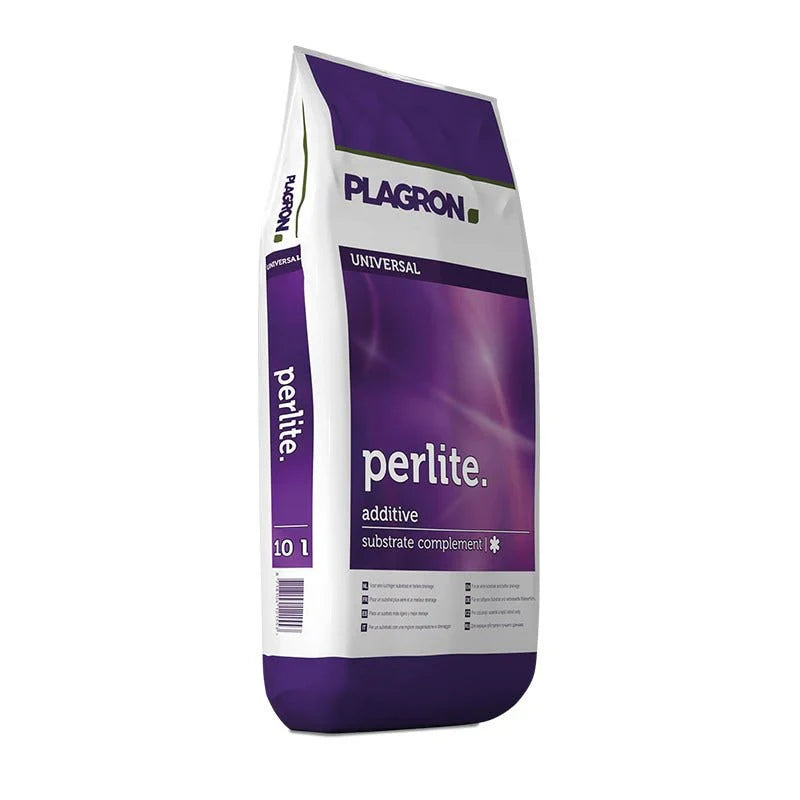
Shop perlite and vermiculite growing media for hydroponics, propagation, potting mixes and indoor gardening. These lightweight mineral products can improve the physical structure of a growing medium, helping growers adjust aeration, drainage and moisture retention to suit different plants and growing methods.
Choose perlite when the priority is creating a lighter, more open mix with improved drainage, or vermiculite when greater moisture retention is required. Both are available in convenient 10-litre bags and larger 100-litre formats for regular or higher-volume use.
Perlite and vermiculite for better growing-media structure
Roots need an appropriate balance of moisture and air. A mix that stays saturated for too long can restrict aeration, while a very free-draining medium may dry faster than the plant or watering routine can accommodate. Perlite and vermiculite allow the structure of a soil, compost or soilless blend to be adjusted without relying on additional fertiliser content.
Neither material is automatically the right choice for every application. Consider the base medium, plant type, container, irrigation frequency and surrounding temperature before deciding whether you need more drainage, greater moisture retention or a combination of both.
What is the difference between perlite and vermiculite?
Perlite for aeration and drainage
Horticultural perlite is a lightweight, porous material produced by expanding volcanic glass. Its irregular white particles help create air spaces within a growing mix, reducing compaction and allowing surplus water to move through more readily. It is commonly blended with soil, compost or coco and can also be used in suitable hydroponic and propagation applications.
Perlite is particularly useful when a base mix feels dense, remains wet for too long or needs a more open structure. Because it promotes drainage rather than holding large quantities of water, plants grown in a high-perlite mix may require more frequent monitoring and irrigation.
Vermiculite for moisture retention
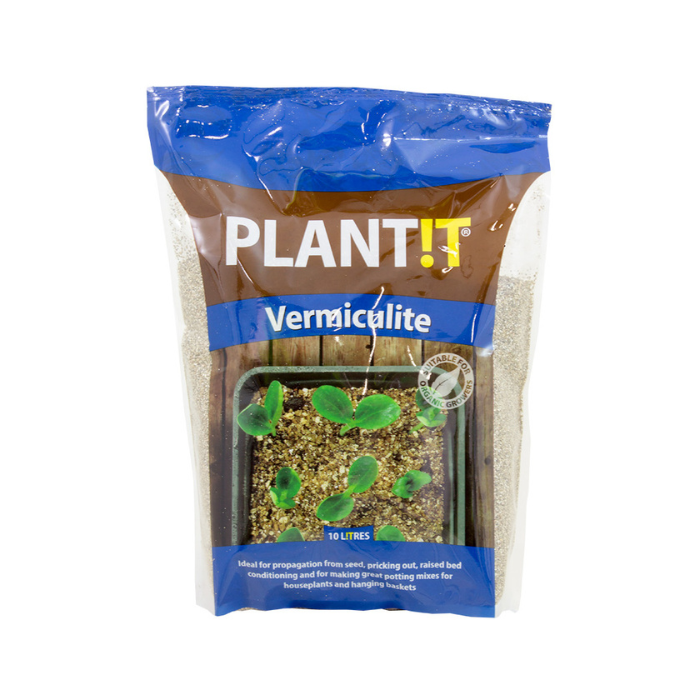
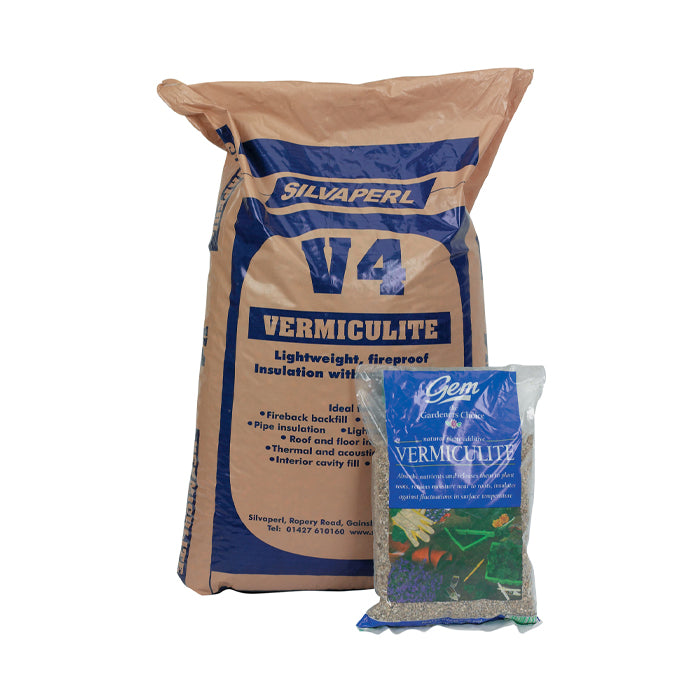
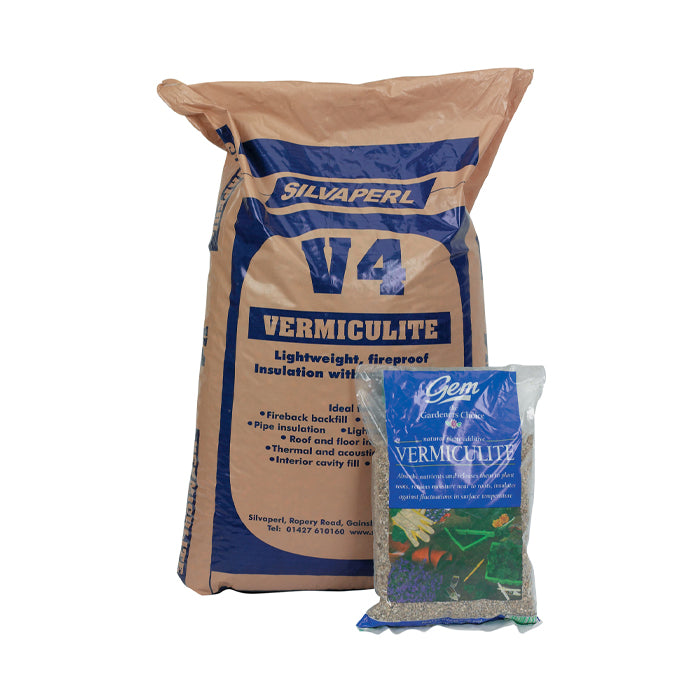
Horticultural vermiculite is a lightweight expanded mineral with a layered structure. It absorbs and retains moisture within a growing mix while still helping to keep the medium workable. This makes it useful for seed sowing, propagation and containers where the priority is slowing moisture loss around developing roots.
Vermiculite is often incorporated into compost or propagation blends rather than being chosen to increase drainage. Use it carefully with moisture-sensitive plants or naturally heavy mixes, as adding too much water-retentive material may keep the root zone wet for longer than intended.
Which growing medium should you choose?
- Choose perlite to create more air spaces, improve drainage and reduce compaction.
- Choose vermiculite when a mix needs to retain moisture for longer between watering.
- Use both when a tested growing recipe requires a balance of aeration and moisture retention.
- Check the existing mix first: many ready-made soils and substrates already contain perlite or other structural ingredients.
- Match the particle size and blend to the plant, pot size, irrigation method and stage of growth.
Using perlite and vermiculite for propagation
Young seedlings and newly rooted cuttings benefit from a medium that remains evenly moist without becoming dense or waterlogged. Vermiculite can help retain moisture around the developing root zone, while perlite can keep a propagation blend open and aerated. They may be used individually or together as components of a suitable seedling or cutting mix.
There is no single mixing ratio that suits every seed, cutting or propagation system. Follow the instructions for the selected plant and base medium, then adjust future batches only after observing drainage, moisture levels and root development. For plugs, cubes and other ready-made options, visit our cutting and seedling media collection.
Adding perlite or vermiculite to soil and coco
Before adding either material, inspect the existing substrate and its ingredient list. Many professional soil mixes already contain perlite, while some coco coir products are supplied as pure coco and others arrive as ready-made blends.
- Measure components consistently so successful mixes can be repeated.
- Combine dry ingredients gradually to distribute particles evenly.
- Test drainage and moisture behaviour before preparing a large batch.
- Do not assume that adding more amendment will always improve the mix.
- Reassess watering frequency after changing the substrate structure.
If you prefer a substrate that is already prepared in a stated ratio, compare our coco blends and mixes. These offer consistent ready-to-use combinations without requiring separate measuring and blending.
Handling and storing loose growing media
Perlite and vermiculite are very lightweight and can produce airborne particles when poured or mixed carelessly. Work gently in a well-ventilated area, avoid creating dust and follow the handling guidance printed on the product packaging. Where appropriate, lightly moistening the material before mixing can help keep loose particles under control.
- Open and pour bags slowly rather than tipping them from height.
- Avoid breathing dust and use suitable protective equipment where directed.
- Keep particles away from eyes and wash hands after handling.
- Reseal opened bags and store them upright in a clean, dry location.
- Keep growing media away from food preparation areas, children and pets.
Choose the right growing medium for your setup
Explore our complete growing media hub to compare perlite and vermiculite with coco coir, soil mixes, clay pebbles, propagation media and organic substrates. Selecting the right structure at the start makes it easier to manage watering, feeding and root-zone conditions throughout the plant's growth.
Why buy perlite and vermiculite from Holland Horticulture?
Established in 1996, Holland Horticulture supplies growing media and hydroponic equipment to beginners, experienced indoor gardeners and commercial growers. Choose convenient or bulk pack sizes with experienced advice, UK delivery and Click & Collect from our stores.
Perlite and vermiculite FAQs
Is perlite the same as vermiculite?
No. Perlite is generally selected to improve aeration and drainage, while vermiculite is normally used to retain more moisture within a growing mix. Their different properties mean they are not always interchangeable.
Can perlite and vermiculite be mixed together?
Yes, they can be combined when a growing recipe requires both aeration and moisture retention. The correct proportions depend on the plant, base medium, container and watering method, so follow an appropriate recipe rather than assuming one ratio suits every application.
Can perlite be used for hydroponics?
Perlite can be used in suitable hydroponic and soilless applications, either alone or as part of a blend. Its light weight and drainage characteristics mean it must be matched to a system that can contain the particles and provide an appropriate watering schedule.
Is vermiculite suitable for seeds and cuttings?
Vermiculite is commonly used as a component of seed-sowing and propagation mixes because it helps retain moisture around developing roots. Avoid keeping the medium excessively wet and follow the requirements of the plant being propagated.
How much perlite or vermiculite should I add?
The amount depends on the starting medium and the balance of drainage and moisture retention required. Check whether the base product already contains an amendment, follow a suitable growing recipe and test a smaller batch before altering a large volume of media.