
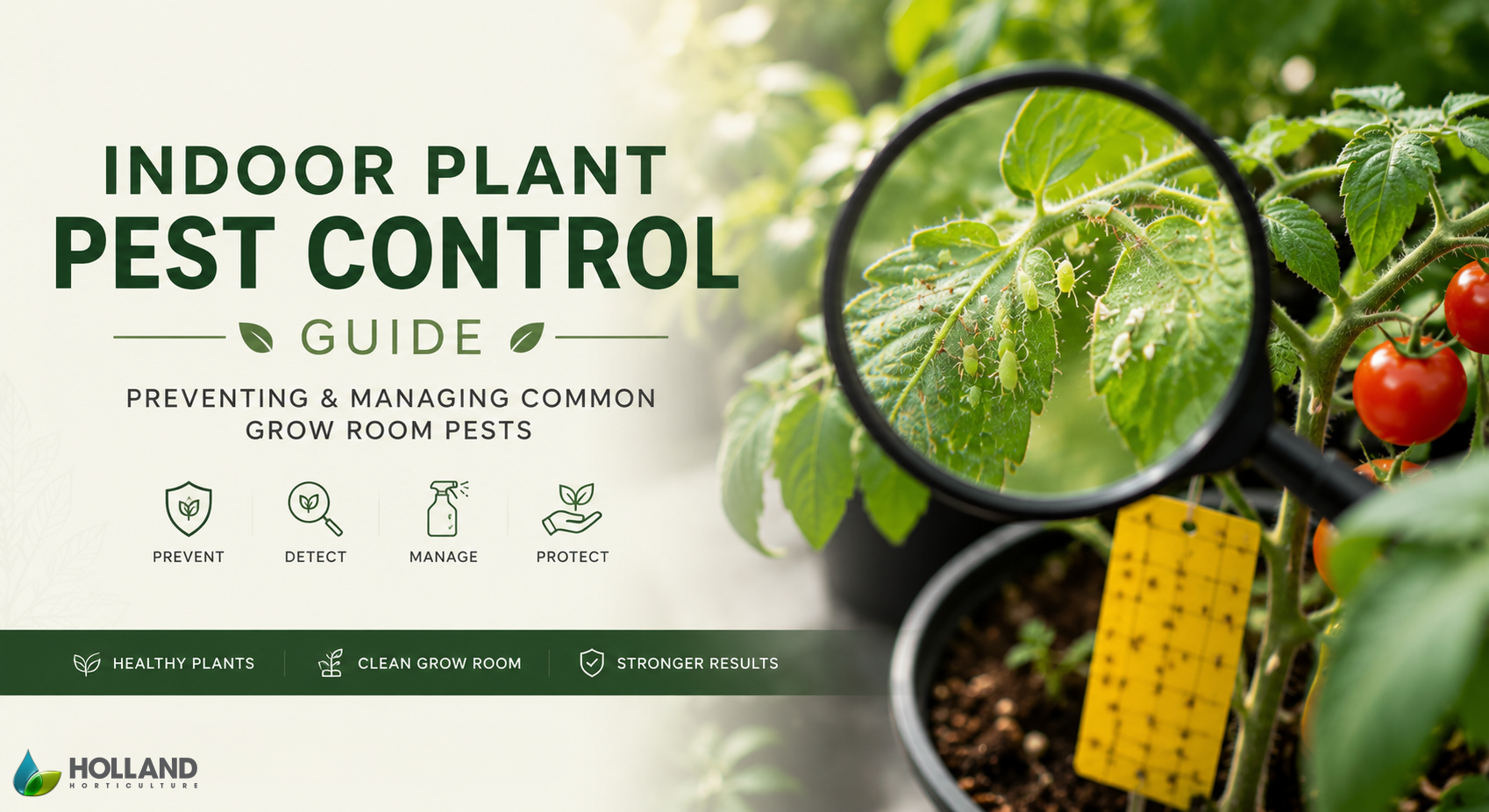
Indoor Plant Pest Control Guide: Preventing & Managing Common Grow Room Pests
Few things are more frustrating for growers than discovering pests in an otherwise healthy indoor garden. Whether you're growing vegetables, herbs, houseplants or ornamental plants, pest infestations can quickly slow growth, damage leaves and reduce overall plant health.
The good news is that most indoor pest problems can be prevented and managed effectively with the right approach. By understanding the most common pests found in UK grow rooms and implementing good growing practices, you can protect your plants throughout every stage of growth.
At Holland Horticulture, we help growers create healthy indoor environments using professional environmental controls, monitoring equipment and pest management solutions.
Why Indoor Plants Still Get Pests
Many growers assume that growing indoors completely eliminates the risk of pests. Unfortunately, insects and plant diseases can still find their way into grow rooms, grow tents and indoor growing spaces.
Pests commonly enter through:
- New plants brought into the growing area
- Contaminated growing media
- Open windows and doors
- Clothing, tools and equipment
- Poorly maintained growing environments
Once established, pests can reproduce rapidly in the warm, stable conditions often found in indoor gardens.
The Most Common Indoor Plant Pests in the UK
Fungus Gnats
Fungus gnats are one of the most common pests encountered by indoor growers. Adult gnats are small flying insects often seen hovering around pots and growing media.
Signs of Fungus Gnats
- Small black flies around plants
- Larvae in growing media
- Slow seedling growth
- Root damage in severe infestations
How to Control Fungus Gnats
- Avoid overwatering
- Allow the top layer of media to dry between irrigations
- Use sticky traps to monitor populations
- Improve airflow around containers
Spider Mites
Spider mites are extremely small pests that feed on plant sap. They thrive in warm, dry conditions and can multiply quickly if left untreated.
Signs of Spider Mites
- Tiny pale spots on leaves
- Fine webbing on foliage
- Leaf discolouration
- Reduced plant vigour
Prevention Tips
- Maintain appropriate humidity levels
- Inspect plants regularly
- Keep growing areas clean
- Quarantine new plants before introduction
Thrips
Thrips are fast-moving insects that feed on plant tissue, causing silver or bronze streaks across leaves.
Signs of Thrips
- Silvery patches on foliage
- Distorted new growth
- Tiny insects visible on leaves
- Black feeding marks
Managing Thrips
- Use monitoring traps
- Inspect leaf undersides regularly
- Remove heavily affected growth
- Maintain good environmental hygiene
Aphids
Aphids are soft-bodied insects that gather on new growth and stems, feeding on plant sap.
Signs of Aphids
- Clusters of insects on stems
- Curled leaves
- Sticky residue on foliage
- Reduced growth rates
Whiteflies
Whiteflies are small winged insects that feed on plant sap and are commonly found on the undersides of leaves.
When disturbed, adult whiteflies often fly upwards in noticeable clouds.
The Importance of Early Detection
The earlier pests are identified, the easier they are to control. Waiting until a severe infestation develops often leads to increased plant stress and more difficult management.
Regular inspections should form part of every grower's routine.
Check Plants Weekly
- Inspect leaf undersides
- Look for discolouration
- Check new growth
- Monitor growing media
- Use sticky traps for monitoring
How Environmental Control Helps Prevent Pests
Healthy growing environments are naturally more resistant to pest outbreaks.
Maintain Proper Airflow
Good air circulation makes conditions less favourable for many pests while strengthening plant growth.
Manage Humidity Levels
Excessively high or low humidity can encourage certain pest populations. Monitoring humidity helps maintain balance.
Control Temperature
Many pests reproduce more rapidly in overly warm environments.
Using environmental controllers, extraction systems and circulation fans helps create stable growing conditions.
Integrated Pest Management (IPM)
Professional growers often follow an Integrated Pest Management (IPM) strategy. Rather than relying on a single solution, IPM combines multiple methods to prevent and manage pests effectively.
Key Principles of IPM
- Prevention first
- Regular monitoring
- Environmental control
- Biological management options
- Targeted treatments when necessary
IPM focuses on long-term plant health rather than reacting only when problems become severe.
Keeping Your Grow Room Clean
Good hygiene is one of the simplest and most effective pest prevention strategies.
Grow Room Cleaning Checklist
- Remove dead leaves immediately
- Clean spills promptly
- Sterilise tools regularly
- Keep floors clean
- Inspect equipment routinely
A clean grow room reduces potential breeding grounds and limits pest populations.
Natural & Biological Pest Management
Many growers prefer preventative biological solutions as part of a wider pest management strategy.
Beneficial insects and biological controls can help manage pest populations while supporting a balanced growing environment.
Always follow supplier guidance and ensure any products used are suitable for your growing situation.
Common Pest Prevention Mistakes
Overwatering
Wet growing media creates ideal conditions for fungus gnats and root-related issues.
Ignoring Early Warning Signs
Small pest populations can quickly become major infestations.
Skipping Regular Inspections
Routine checks often prevent serious outbreaks.
Introducing New Plants Without Checking Them
New arrivals are one of the most common sources of indoor pests.
Frequently Asked Questions
What is the most common indoor plant pest in the UK?
Fungus gnats are among the most frequently encountered pests in indoor growing environments.
How often should I inspect plants for pests?
Weekly inspections are recommended, with more frequent checks during warmer periods.
Can environmental control reduce pest problems?
Yes. Stable temperature, humidity and airflow can significantly reduce the likelihood of infestations.
What is IPM?
Integrated Pest Management is a preventative approach that combines monitoring, environmental control and targeted management strategies.
Final Thoughts
Pest management is an important part of successful indoor growing. By combining good hygiene, regular monitoring and stable environmental conditions, growers can prevent many common pest problems before they become serious.
Explore environmental controls, monitoring equipment, sticky traps, ventilation systems and grow room essentials at Holland Horticulture to keep your indoor garden healthy and productive throughout the growing cycle.